Beyond the Search Bar: Navigating the Era of AI-Native Search Engines
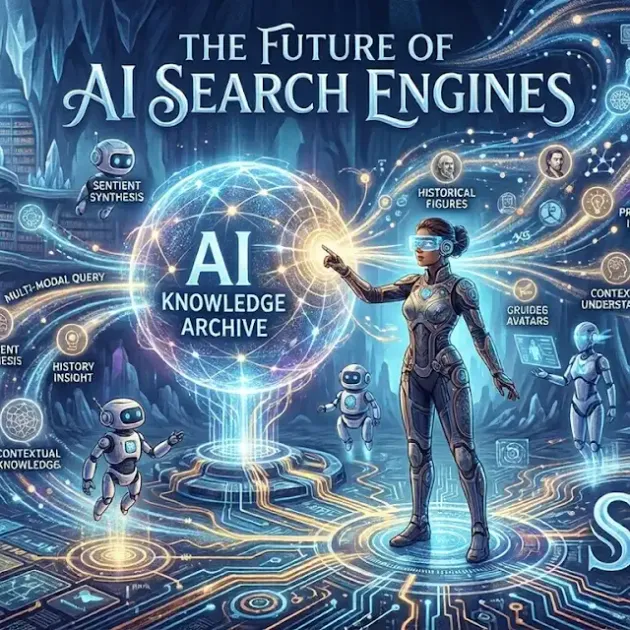
Beyond the Search Bar: Navigating the Era of AI-Native Search Engines
The way we interact with the internet is undergoing a paradigm shift. For the past three decades, search engines relied on keywords. Users typed phrases into Google or Bing to retrieve relevant documents. Today, AI-powered search is moving us from Information Retrieval to Information Synthesis.
Modern AI Search Engines—powered by Large Language Models (LLMs) and Retrieval-Augmented Generation (RAG)—go beyond pointing users to URLs. They parse the web in real time, delivering context-aware, synthesized answers. For developers and startups, this represents a complete reconfiguration of how data is discovered, consumed, and acted upon.
The Technical Backbone: RAG and Vector Embeddings
To understand AI-native search, it’s critical to grasp Retrieval-Augmented Generation (RAG). Unlike traditional LLMs that rely solely on static training data, RAG allows AI to query dynamic external datasets before producing a response.
1. Vector Databases: The New Index
Traditional search engines rely on inverted indexes (mapping words to documents). AI search uses vector embeddings to represent semantic meaning in high-dimensional space.
- Semantic Proximity: A query for "scalability" retrieves related concepts like "horizontal growth" and "load balancing," even if those words aren’t in the text.
- Tools for Developers: Popular solutions include Pinecone, Milvus, and Weaviate, capable of managing billion-scale vector datasets.
2. The Context Window Revolution
With context windows expanding into the millions of tokens (e.g., Gemini 1.5 Pro), AI can process more data at once, improving comprehension and reasoning. Hybrid search strategies combining dense vector retrieval and traditional keyword matching ensure both accuracy and low latency.
Impact on Software Developers and Startups
Building AI-First Applications
The traditional "search bar" is evolving into a reasoning engine. Developers can leverage AI to automate complex workflows:
- API-First Search: Use APIs from Perplexity, Exa (formerly Metaphor), and Tavily to feed structured, LLM-ready data into autonomous agents.
- Agentic Workflows: Future agents can search, compare, and execute tasks automatically, from booking flights to managing research.
SEO Challenges and Opportunities
The rise of Search Generative Experience (SGE) means zero-click searches are becoming the norm. Users get answers directly on the search page, reducing website traffic.
- LLM Optimization (LLMO): To stay visible, startups must optimize for AI: provide structured data (JSON-LD), create authoritative documentation, and ensure content is AI-readable.
Challenges: Hallucinations and Attribution
Despite its potential, AI search presents trust challenges:
- Hallucinations: AI can generate confident but false responses. Solutions include grounding outputs in verified sources.
- Cost & Scalability: AI inference is computationally expensive. Scaling to millions of users requires hardware optimization (NVIDIA H100s/B200s) and model quantization.
Conclusion: The Consultant Model
The AI search engine of 2026 is no longer a librarian delivering books. It is a consultant: synthesizing all available information, tailoring it to a specific user problem, and delivering actionable insights.
For developers, startups, and AI infrastructure builders, the challenge—and opportunity—lies in making AI search faster, more accurate, and ethically sound, defining the future of information discovery.
FAQ
Q1: What is AI-native search? AI-native search combines LLMs and RAG to generate context-aware answers, rather than returning a list of links.
Q2: Why are vector databases important? They store semantic embeddings, enabling AI to understand and retrieve meaning rather than just keywords.
Q3: How can startups optimize for AI search? Implement LLM Optimization (LLMO): structured data, authoritative documentation, and AI-readable content.