Why Progressive Web Apps Are the Future of Websites (2026 Guide)
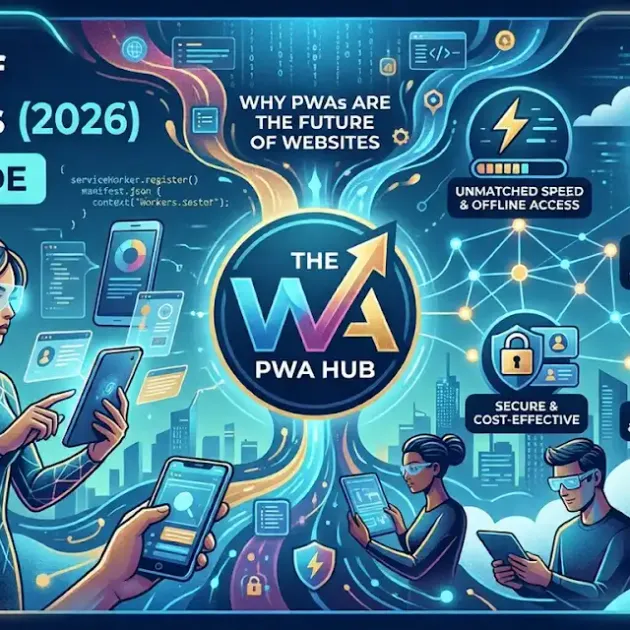
Why Progressive Web Apps Are the Future of Websites (2026 Guide)
Web technologies continue to evolve, and one of the most important innovations in modern web development is the Progressive Web App (PWA).
Progressive Web Apps combine the best features of traditional websites and mobile applications. They provide fast performance, offline functionality, and a native app-like experience — all within a web browser.
In 2026, PWAs are becoming a popular solution for businesses that want to deliver high-quality digital experiences without developing separate mobile applications.
What is a Progressive Web App (PWA)?
A Progressive Web App is a type of web application built using modern web technologies that behaves like a mobile app.
PWAs run in a browser but can also be installed on a user's device, allowing them to work like native applications.
Key characteristics of PWAs include:
- Installable on mobile and desktop devices
- Works offline or with poor internet connections
- Fast loading speeds
- Push notifications support
- App-like user interface
This technology allows websites to deliver a more engaging and responsive user experience.
How Progressive Web Apps Work
PWAs rely on several core technologies that enable their advanced capabilities.
1. Service Workers
Service workers are background scripts that allow PWAs to cache resources and provide offline functionality.
They enable features such as:
- Offline browsing
- Background synchronization
- Faster loading times
2. Web App Manifest
The web app manifest is a configuration file that defines how the application appears when installed on a device.
It includes:
- App name
- Icons
- Theme colors
- Display mode
3. HTTPS Security
PWAs require secure HTTPS connections to ensure safe data transmission and protect user information.
Benefits of Progressive Web Apps
PWAs offer several advantages for both users and businesses.
Faster Performance
Because resources are cached locally, PWAs load much faster than traditional websites.
Offline Access
Users can access content even when they have limited or no internet connection.
Lower Development Cost
Developers can build one web application that works across multiple platforms instead of creating separate Android and iOS apps.
Improved User Engagement
Push notifications and app-like interactions increase user engagement and retention.
Progressive Web Apps vs Native Mobile Apps
While native mobile applications are built specifically for mobile platforms, PWAs offer a more flexible alternative.
| Feature | PWA | Native App |
|---|---|---|
| Installation | From browser | From app store |
| Development cost | Lower | Higher |
| Platform compatibility | Cross-platform | Platform-specific |
| Offline support | Yes | Yes |
For many businesses, PWAs provide a cost-effective solution while still delivering excellent performance.
Real-World Examples of PWAs
Many major companies use Progressive Web Apps to improve performance and user experience.
Examples include:
- E-commerce platforms
- News websites
- Social media platforms
- Online booking systems
These companies use PWAs to increase speed, engagement, and conversion rates.
The Future of PWAs
The popularity of Progressive Web Apps continues to grow as browsers add more advanced capabilities.
Future improvements may include:
- Better hardware access
- Enhanced offline capabilities
- Deeper integration with operating systems
- Improved performance for complex applications
As web technology advances, PWAs are expected to become a standard approach for building modern web applications.
Conclusion
Progressive Web Apps represent a powerful shift in how websites are built and experienced. By combining the accessibility of the web with the functionality of mobile apps, PWAs provide fast, reliable, and engaging digital experiences.
Businesses that adopt PWA technology can reduce development costs while delivering high-performance applications to users across multiple devices.