Search Engine Optimization (SEO): The Complete Guide to Ranking Your Website in 2026
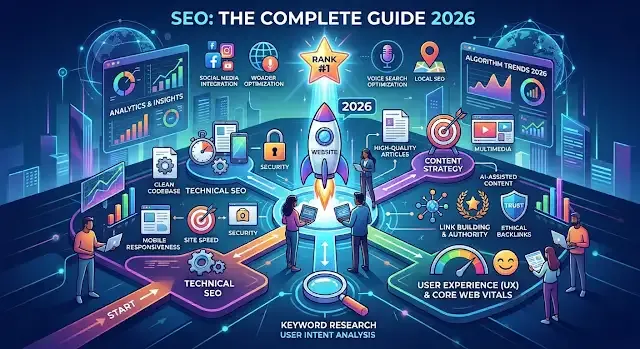
Search Engine Optimization (SEO): The Complete Guide to Ranking Your Website in 2026
Search Engine Optimization (SEO) is one of the most important strategies for growing a website’s traffic organically. It involves creating high-quality content and optimizing your website so search engines like Google can understand and rank it higher in search results.
When SEO is implemented correctly, it helps users discover your website when they search for information, products, or services related to your content.
In this guide, we will explore how SEO works and the best strategies to improve your website’s ranking.
What is SEO?
SEO (Search Engine Optimization) is the process of optimizing website content and technical structure to improve visibility in search engine results pages (SERPs). The goal is to attract more relevant visitors by making your content easier for search engines and users to find.
Search engines use automated programs called crawlers or bots that scan websites, analyze content, and store information in a search index. When someone searches for a keyword, the search engine retrieves the most relevant pages from that index and ranks them accordingly.
How Search Engines Rank Websites
Search engines evaluate many factors when ranking web pages. Some of the most important include:
1. High-Quality Content
Content is the most important ranking factor. Websites that provide useful, authoritative, and relevant information are more likely to rank higher.
2. Backlinks
Links from other websites act as signals of trust. The more quality websites linking to your content, the more credible your website appears to search engines.
3. Keyword Optimization
Using the right keywords helps search engines understand what your page is about.
4. User Experience
Factors such as page speed, mobile friendliness, and navigation influence how users interact with your website.
5. Technical SEO
Technical aspects such as site structure, indexing, and page loading speed also impact rankings.
Six Powerful Ways to Improve Your Website SEO
1. Build a Clear SEO Strategy
A strong SEO strategy starts with understanding your audience and identifying the keywords they search for.
Useful keyword research tools include:
- Google Keyword Planner
- SEMrush
- Ahrefs
Keyword research helps identify opportunities to create content that users are actively searching for.
2. Publish Relevant and Authoritative Content
High-quality content is the foundation of SEO success. Websites that consistently publish valuable information tend to rank higher in search results.
Tips for creating SEO-friendly content:
- Focus on one primary keyword per page
- Use clear headings (H1, H2, H3)
- Include keywords naturally in the text
- Provide helpful and accurate information
Search engines reward websites that demonstrate expertise and provide value to readers.
3. Update Your Content Regularly
Search engines prefer fresh and updated content. Regularly reviewing and updating your pages helps maintain relevance and improve rankings.
You can keep content fresh by:
- Updating statistics and information
- Adding new sections or examples
- Publishing blog articles on related topics
Frequent updates signal that your website is active and reliable.
4. Create a Link-Worthy Website
Websites that provide useful resources naturally attract backlinks from other websites. These links increase your domain authority and improve search rankings.
To build link-worthy content:
- Create in-depth guides and tutorials
- Publish original research or insights
- Use descriptive anchor text for links
A strong linking strategy improves both usability and SEO performance.
5. Optimize for Mobile and Technical SEO
Technical SEO ensures search engines can easily crawl and index your website.
Important technical SEO factors include:
- Fast page loading speed
- Mobile responsive design
- Secure HTTPS connection
- Structured data markup
- Clean URL structure
Improving these elements enhances both user experience and search visibility.
6. Optimize Metadata and Images
Metadata helps search engines understand the content of your pages.
Key metadata elements include:
- Title tags – The title shown in search results
- Meta descriptions – Short summaries of your page
- Alt text – Descriptions for images
Using optimized metadata increases click-through rates and helps search engines interpret your content.
The Future of SEO: Search Everywhere Optimization
SEO is evolving beyond traditional search engines. Users now search across multiple platforms including:
- Social media
- YouTube
- AI tools and chatbots
- Voice assistants
- App stores
This broader strategy is known as Search Everywhere Optimization (SEOx), which focuses on making your content discoverable across many digital platforms.
Conclusion
SEO is not a one-time task but an ongoing process that involves creating high-quality content, optimizing technical performance, and understanding user intent.
By focusing on content quality, keyword research, technical improvements, and user experience, your website can achieve better rankings and attract more organic traffic.
A well-implemented SEO strategy can transform your website into a powerful marketing tool that consistently brings visitors, leads, and growth.